Welcome back, spring! Everything you need to know about the upcoming vernal equinox
If you look up the sunrise and sunset times for our local area, it’s roughly 12 hours of daylight and 12 hours of night.
More Stories

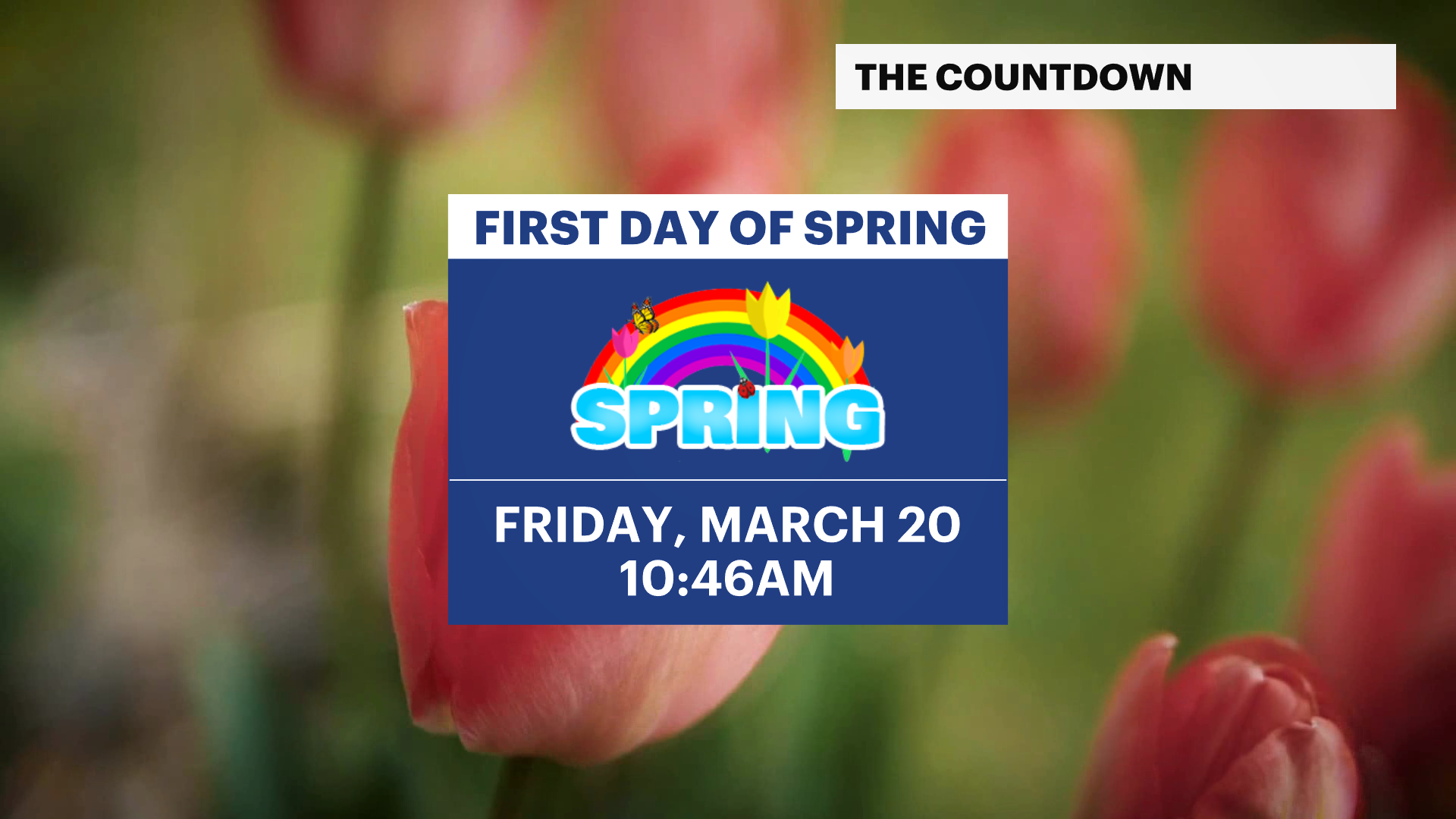
Spring is almost here! The official kickoff to the season is Friday, March 20.
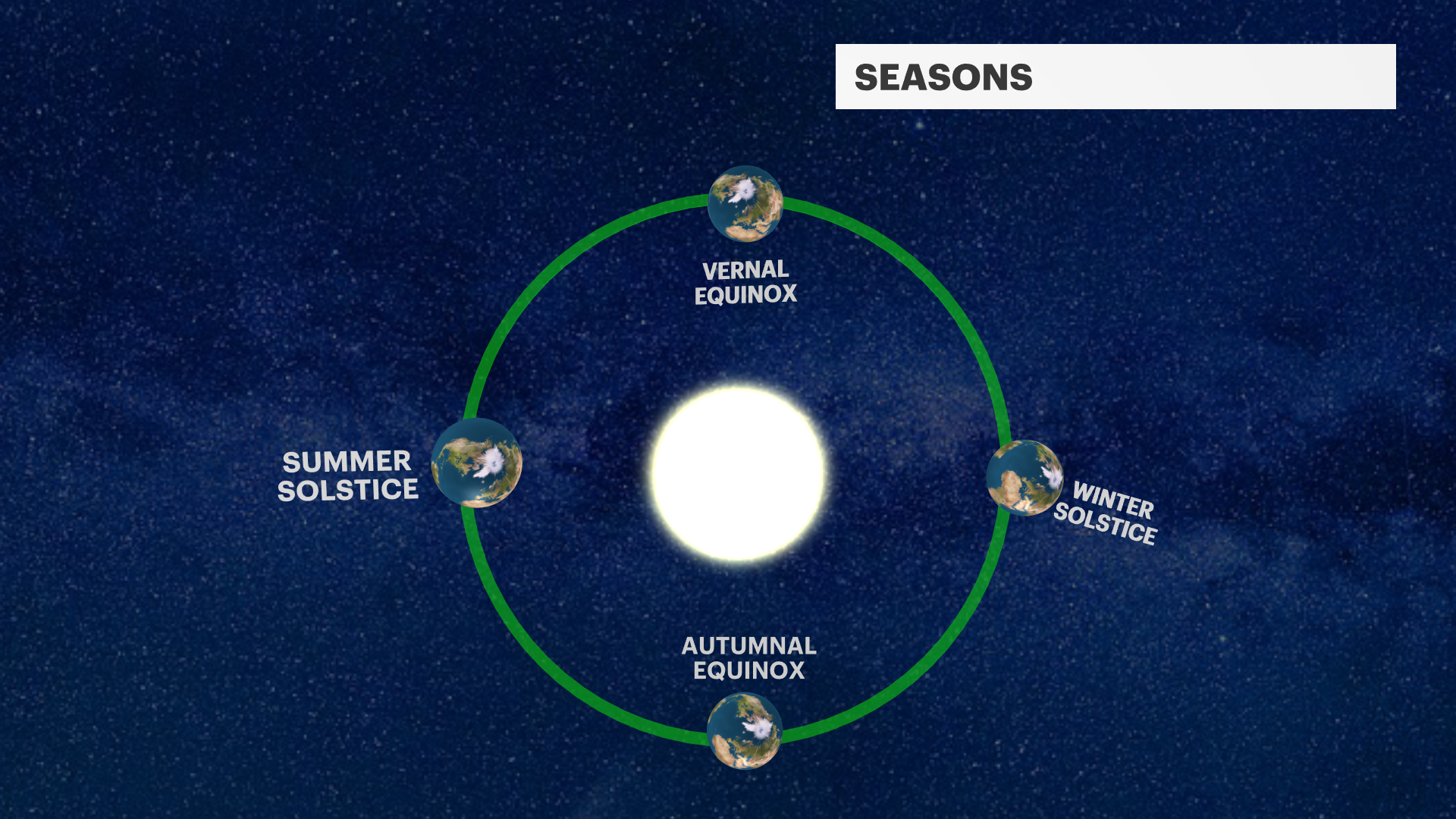
It’s the vernal equinox, or the halfway point between the winter and summer solstice. The Earth is neither tilted toward nor away from the sun at this midpoint. The Earth’s axial tilt is the reason why we have experience different seasons. At the equinoxes, the sun shines directly on the equator and both hemispheres are equally illuminated.
The word equinox means just that. It comes from the Latin, aequus which means equal and nox means night. If you look up the sunrise and sunset times for our local area, it’s roughly 12 hours of daylight and 12 hours of night. Because of how the equinox is measured, along with atmospheric refraction and the fact that we see the sun as a disk rather than a point of light, the 12‑hour rule isn’t exact.
The date when we actually do have 12 hours of each in the tri-state area [about 40 degrees latitude] is known as the equilux and that occurs a few days earlier on March 17.
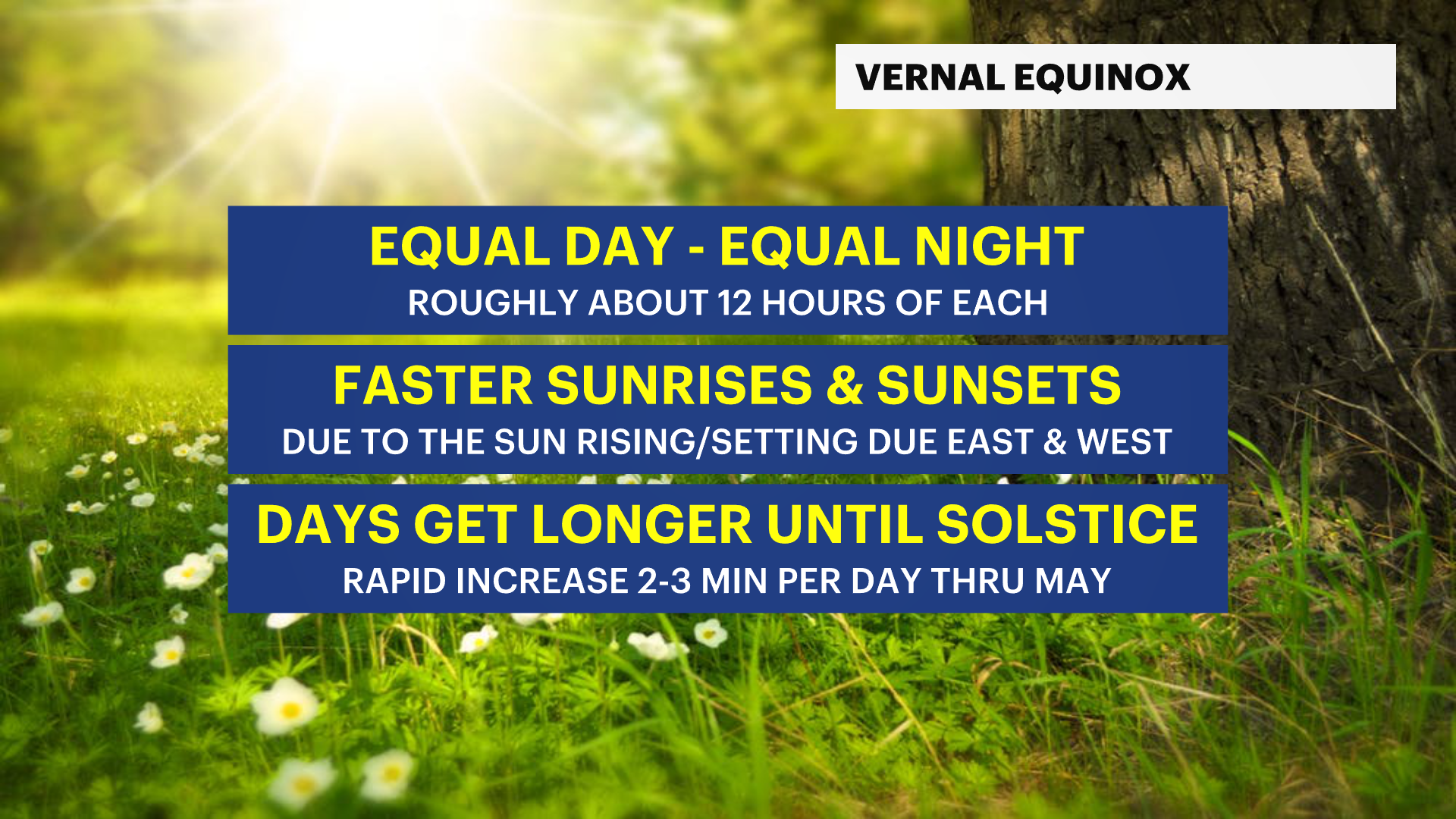
The equinox is also remarkable because our sunrises and sunsets are the fastest ones we see for the whole year. This is due to the sun rising and setting exactly due east and due west.
We also see a rapid increase in the amount of daylight now through May and gain about 2-3 minutes each day. Our days will grow longer through the summer solstice on June 21. By the time we reach the summer solstice, we will have gained about three hours of daylight.