Census changes could cost NY and CT more than 1 million people. Why the Trump administration says it's necessary
The U.S. Census Bureau is proposing to stop counting undocumented people because they lack "allegiance to the United States." The move could cost the tri-state area tens of billions of dollars in federal funding.





New York and Connecticut could lose more than one million people in the next U.S Census because of sweeping changes proposed by the Trump administration, leaders from both states are warning.
The administration argues that undocumented residents should not be counted, but the change could cost the tri-state area tens of billions of dollars for roads, schools and Medicaid funding – as well as seats in Congress and the Electoral College.
COUNTING UNDOCUMENTED RESIDENTS
The Census Bureau wants to change how residents have been counted since 1790.
The proposal, published to the Federal Register in September, would exclude all non-citizens without a green card – despite the 14th Amendment stating that the census must include the “whole number of persons in each state.” The agency argued that undocumented people are “not true inhabitants" because they "lack of a sufficient tie and allegiance to the United States.”
The census would also stop asking for race and ethnicity data.
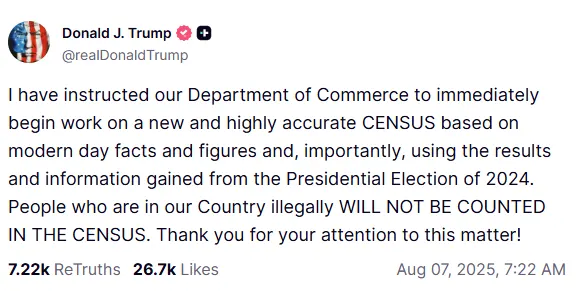
The administration did not respond to a request for comment. But on social media in August 2025, President Donald Trump said he was ordering “a new and highly accurate CENSUS … People who are in our Country illegally WILL NOT BE COUNTED IN THE CENSUS.”
“AN EFFORT TO RIG THE SYSTEM”
The change would have a major impact on the tri-state area.
“This is an effort to rig the system,” said Rep. Rosa DeLauro (D-CT 3rd District). “[The census] determines how trillions of dollars in federal funds are allocated to our states, to our counties, to our communities.”
DeLauro is promising action if the Trump administration doesn’t back off. In January, she will take over the House Appropriations Committee, which funds the U.S. Census Bureau.
“The administration’s proposal to exclude non-citizens and non-permanent residents from the Census is unconstitutional,” said New York City Council president Julie Menin. “Every New Yorker deserves to be counted, and we will continue fighting to ensure every community across our city is fully represented.”
New York Attorney General Letitia James promised to sue if the changes move forward.
“My office fought this same issue in 2019, and won at every level, all the way up to the Supreme Court,” James said. “If this administration wants to go for round two, we are prepared to win again.”
“SNOWBIRD” EFFECT?
Another proposed change could cost the region even more people.
The Census Bureau wants to base residence on where someone lives between Jan. 3 and April 1, 2030. Tri-state leaders worry that “snowbirds” who spend the winter in warmer climates won’t be counted.
“You’re in Milford most of the year, and then you go to Mar-a-Lago for a few months, and all of a sudden, you’re a Florida resident,” said Connecticut Gov. Ned Lamont.
The Census Bureau insisted the fears are unfounded.
“To be clear, however, this definition of the ‘census enumeration period’ would not restrict the Census Bureau from collecting information after April 1 about the relevant period,” according to the proposal. “For example, the Census Bureau intends to consider tax records filed after April 1 insofar as they are probative of persons’ ‘usual residence’ from January 3 to April 1.”
WHAT’S NEXT?
A public comment period ended on Nov. 2.
If the changes go through, they will almost certainly be challenged in court. Congress could threaten the Census Bureau’s funding, and the next president elected in 2028 could also intervene.
But the clock is already ticking.
“The census is not four years away,” said Terri Ann Lowenthal, nationally recognized Census consultant who managed the House census oversight committee for seven years. “The first census, official census, operation starts next May – less than six months.”


