Michelle Troconis’ legal team rests their case in fight to overturn Jennifer Dulos conviction
The trial, in which Troconis is seeking to get her conviction vacated based on constitutional grounds, wasn’t initially scheduled to be back in court until Friday, but an extra day was added due to testimony last week going longer than expected.

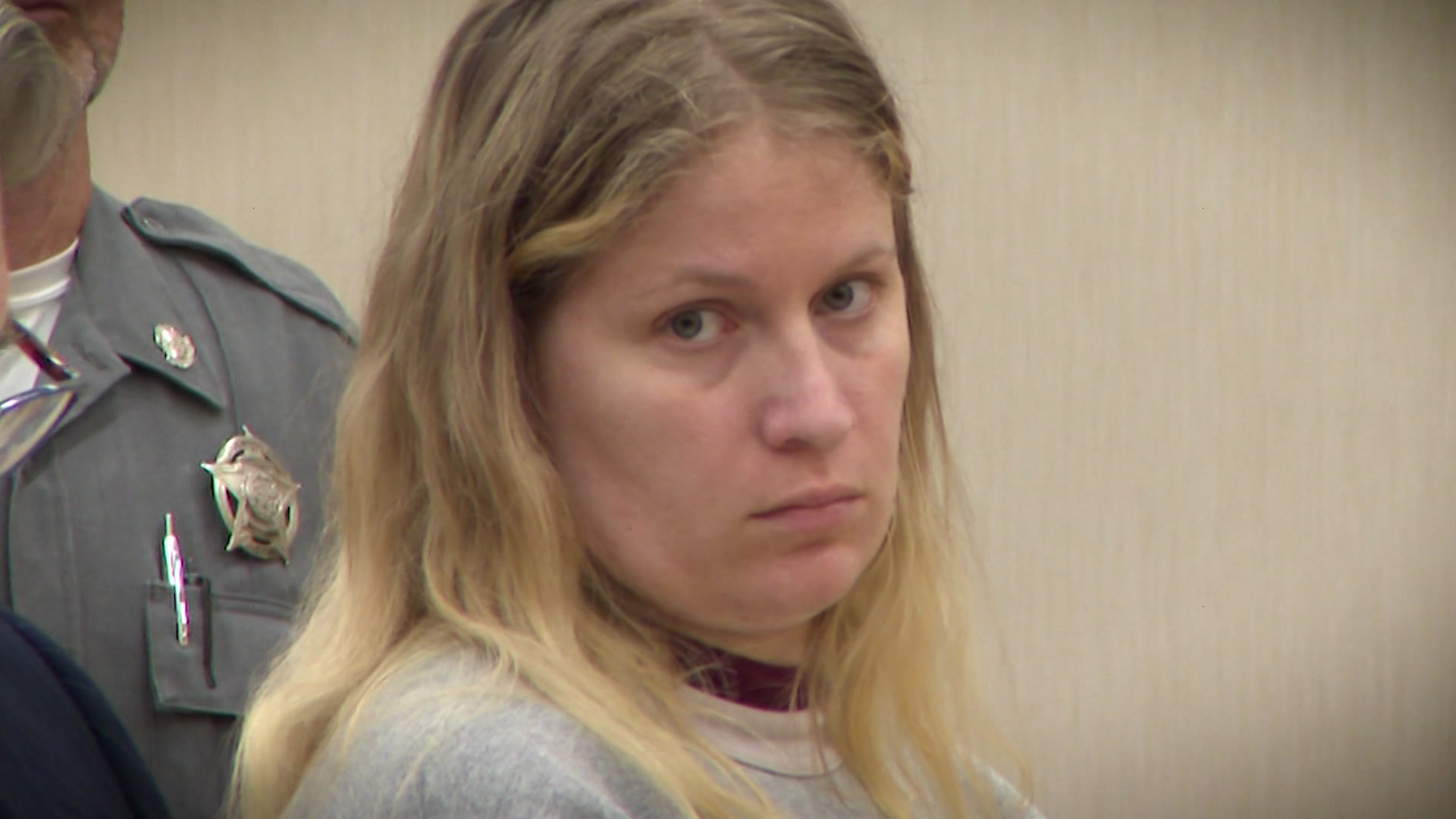
Michelle Troconis’ legal team rested their case on Tuesday in Troconis’ fight to get her conviction in the Jennifer Dulos case tossed on constitutional grounds of ineffective counsel. It came at the end of Day 3 of Troconis’ habeas trial at Rockville Superior Court in Vernon, where most habeas cases are heard.
Most of the day focused on the state’s cross examination of attorney Michael Fitzpatrick, an expert in habeas cases who was hired to testify on Troconis’ behalf. Last week, Fitzpatrick stated that Troconis’ initial lawyer, Andrew Bowman, was “not reasonably competent” in his representation of her because he allowed her to speak with police three separate times without an immunity agreement after Jennifer Dulos vanished on May 24, 2019.
Those hours-long interviews, in which Troconis gave inconsistent statements, were used against her during her criminal trial in 2024. A jury found Troconis guilty of conspiracy to commit murder, evidence tampering, conspiracy to commit evidence tampering and hindering prosecution in the disappearance and presumed death of Jennifer Dulos, the estranged wife of Troconis’ former boyfriend, Fotis Dulos.
Tuesday focused on the state’s cross-examination of Fitzpatrick, with Senior Assistant State’s Attorney Russell Zentner going after Fitzpatrick’s credibility. Zentner repeatedly compared statements Fitzpatrick made on the stand last week to ones he made in the past. Zentner played part of an interview Fitzpatrick did with one of the local television stations during Troconis’ criminal trial in 2024. In that video clip, Fitzpatrick was asked about Bowman allowing his client to continue to talk to investigators.
“I have to think that the reason Andrew Bowman didn't stop her is because he thought his client could handle herself and that it would be advantageous to her,” Fitzpatrick said in the video.
Zentner pointed out that statement, which Fitzpatrick wasn’t paid for, contradicted his recent testimony, which Fitzpatrick is being well compensated for.
“That was my best estimate or my best guess at that point in time as to why he allowed that to occur,” Fitzpatrick responded.
"And that would be consistent with what Mr. Bowman testified to in this court," Zentner countered.
“I don't think you could distill all the testimony he gave in this court down to that one point,” Fitzpatrick said back.
Fitzpatrick has testified in several other habeas trials, including the high-profile Michael Skakel case. The state pointed out that in some of those trials—including one in 2013—he claimed he'd tried more cases and more homicides than he testified to last week.
“I acknowledge the inconsistencies. I wish I could explain it to you. All I can say is the numbers I gave in this proceeding are the accurate numbers because I took the time to sharpen the pencil and figure out how many cases I had tried, how many were homicides, so on and so forth,” Fitzpatrick said in response.
Fitzpatrick was first called to the stand last Friday where he spent the afternoon criticizing Bowman’s actions as Troconis’ counsel—specifically allowing her to be interviewed by police in three separate instances from June-August 2019. He said the first one should’ve never happened.
"I have four reasons. First of all, she was emotionally distraught, second of all she was exhausted, third it was anticipated that the interview was going to take place in English which is not her primary language, and fourth she was not a good candidate for a police interview," Fitzpatrick testified. "A lawyer's number one duty is to protect the client's legal rights."
Fitzpatrick also testified Bowman failed to adequately prepare Troconis before the interviews and said Bowman should've cut the first interview short and never agreed to a second one.
"The recommendation in each of the three instances did not meet the prevailing professional norms," Fitzpatrick stated.
On Tuesday, Zentner got Fitzpatrick to admit there are multiple ways to defend a client. Zentner also honed in Fitzpatrick’s testimony that Bowman erred by not having a Spanish interpreter for Troconis at the interrogations.
“In this proceeding here, do you see the assistance of a Spanish interpreter? Zentner asked.
"I do not," Fitzpatrick said.
“Your honor, I would respectfully ask the court to take judicial notice,” Zentner stated.
Bowman spent all of last Monday and half of Friday defending his actions as Troconis’ attorney. He represented her for about eight months following Jennifer Dulos’ disappearance.
The mother of five was last seen dropping her kids off at school in New Canaan. Jennifer and Fotis Dulos were in the midst of a bitter custody battle at the time. Police believe Fotis Dulos attacked his estranged wife in her garage, then disposed of her body. Jennifer Dulos has never been found but was legally declared dead. Though Fotis Dulos was arrested on several charges including murder and kidnapping, he died by suicide at the end of January 2020.
Bowman testified that he believed Troconis was innocent and at first, repeatedly told her not to speak with law enforcement because anything she said could be used against her in court. But Bowman said that changed when he got a call from then-Stamford State’s Attorney Richard Colangelo. Bowman told the court Colangelo said, “We want her cooperation. If she's not going to cooperate, if we find Jennifer’s body, we're going to charge her with accessory to murder.”
Bowman classified the conversation as "a statement of present intention-which I found credible-and it was a threat."
He said he took the message to his client and told her she had a decision to make.
“What I said to her, though, was whatever you do, if you go in there and speak with them, it's got to be the truth. You cannot lie. It has to be the truth, and she said she understood,” Bowman stated. “She was persuasive, so I made a judgement to recommend to her to talk to them, but in the end, it was her decision.”
When asked why he didn’t get a deal for Troconis before she sat down with investigators, Bowman said his more than 50 years of experience have taught him prosecutors don't offer protections without knowing what someone will say.
"They want to know if they can believe this person before they start making promises and giving them, you know, protections," Bowman testified, adding even if Troconis had an agreement, it would've been voided. "There's a carrot and a stick here. And the carrot is we go to bat for you—it could be the amelioration of the punishment, it could be dropping charges, it could be not bringing charges—but in return you've got to tell the truth," Bowman testified.
Initially, Troconis gave Fotis Dulos a false alibi, saying he was home with her when Jennifer Dulos vanished.
Bowman testified he agreed to subsequent police interviews to help rehabilitate Troconis’ credibility and further establish her innocence. He said he expected Troconis to become a cooperating witness for the state against Fotis Dulos but that all changed with his suicide. Bowman called it “devastating” to Troconis’ legal position.
The initial prosecutor on the case, Richard Colangelo, was also called as a witness Friday. Colangelo confirmed Bowman’s recollection of their phone call. He also testified he had no intention of offering protections to Troconis before she talked but left the door open to what might’ve happened if Fotis Dulos hadn’t died.
"It was always my idea up until the time Mr. Dulos passed away, I was trying to figure out a way to use her as a witness against him," Colangelo stated.
With Troconis’ attorneys resting, Zentner has until mid-Thursday to decide whether he’ll call additional witnesses to support the state’s position that Bowman was competent, and Troconis’ conviction should stand. If the state does so, the case will return to court and wrap up Friday. If not, Judge Carl Schuman will give attorneys for both sides a deadline to file a brief arguing their position, then another deadline to file a rebuttal brief. Schuman will then have 120 days—which Schuman said he doesn’t expect to need all of—to issue a ruling on whether Bowman provided ineffective counsel. Remedies could include vacating Troconis' convictions and releasing her from prison. If that occurs, the prosecution would have to decide whether to seek a new trial.
The habeas case is separate from Troconis' recent appeal of her convictions. In that, she's challenging decisions made by the trial judge on what evidence was and wasn’t allowed in.
PRIOR COVERAGE:
Troconis habeas trial begins in attempt to vacate conviction in Jennifer Dulos death